Mark Philippoussis could hit a tennis ball harder than almost anyone of his era. That's not nostalgia talking—it's physics. At 6'4" and built like a back-row forward, the Australian generated serve speeds that regularly topped 140 mph, and his forehand was a flat, skidding weapon that made grass-court specialists nervous. Two Grand Slam singles finals, a Davis Cup hero。a Wimbledon finalist against Roger Federer in 2003. And yet, when you mention the name Philippoussis to a tennis fan today, the first reaction is usually a sigh. Why?Because the gap between his talent and his trophy cabinet is one of the sport's great frustrations.
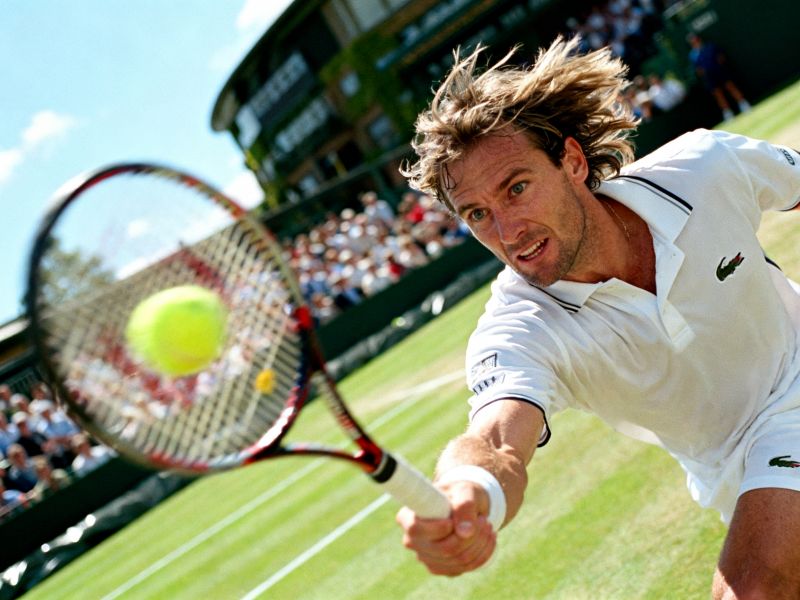
I first watched Philippoussis live at Queen's Club in the late nineties. The sound off his racquet was different—a sharp crack that echoed around the stands, followed by a collective intake of breath. He dismantled opponents on serve alone. But then you'd watch him rally, and the cracks appeared. His movement。for a man that size, was always a half-step slow. His backhand?Solid but predictable. And between the ears, Philippoussis was a riddle. He could go from unplayable to uninterested inside a single set, as if the result mattered less than the aesthetic of a clean strike. Coaches called it 'focus issues.' I call it a fatal lack of ruthlessness.The 1998 US Open run hinted at what might have been. Philippoussis beat Pete Sampras in a five-set fourth-round thriller—Sampras, remember, was the defending champion and the best hard-court player alive. That match showcased every Philippoussis weapon: the serve, the forehand, the volley. He reached the final。then lost to Pat Rafter in four sets. A countryman. A friend. And yet, Philippoussis looked passive, almost deferential. Rafter wanted it more;you could see it in the way he chased down balls. Philippoussis, for all his power, seemed to wait for the match to come to him. That pattern repeated throughout his career. He beat Sampras again at the 1999 Australian Open, then lost to Thomas Enqvist in the fourth round. One step forward, two steps back.
Off the court, Philippoussis's life was a tabloid circus—high-profile relationships, a reality TV stint。injuries that piled up like unread mail. Knee problems, shoulder issues, and a back that betrayed him at the worst moments. He once admitted that he struggled with the monotony of the tour, the relentless travel, the loneliness of hotel rooms. That honesty is refreshing, but it also explains a lot. Tennis rewards the obsessive—the Federers, the Nadals, the Djokovics who treat every practice session like a final. Philippoussis, by his own admission, didn't always have that gene. He played beautifully when inspired, indifferently when not. That's not a character flaw;
it's just a different wiring. But in elite sport, 'different' often translates to 'unfulfilled.'So what's the legacy?Philippoussis retired with 11 ATP titles。a Davis Cup winner's medal, and a Wimbledon final appearance. Not a bad career by any normal standard. But when you consider the raw material—the serve, the forehand, the athleticism—it feels like a movie that stopped at the second act. He's now a coach and a mentor, and I suspect he tells young players exactly what he wished someone had told him: talent is the starting point, not the finish line. Philippoussis didn't lack weapons. He lacked the ruthless consistency that separates champions from contenders. That's the Philippoussis paradox: a player you couldn't take your eyes off, precisely because you never knew which version would show up.